Ottawa Winter Gutter Cleaning: When to Clean and What to Check
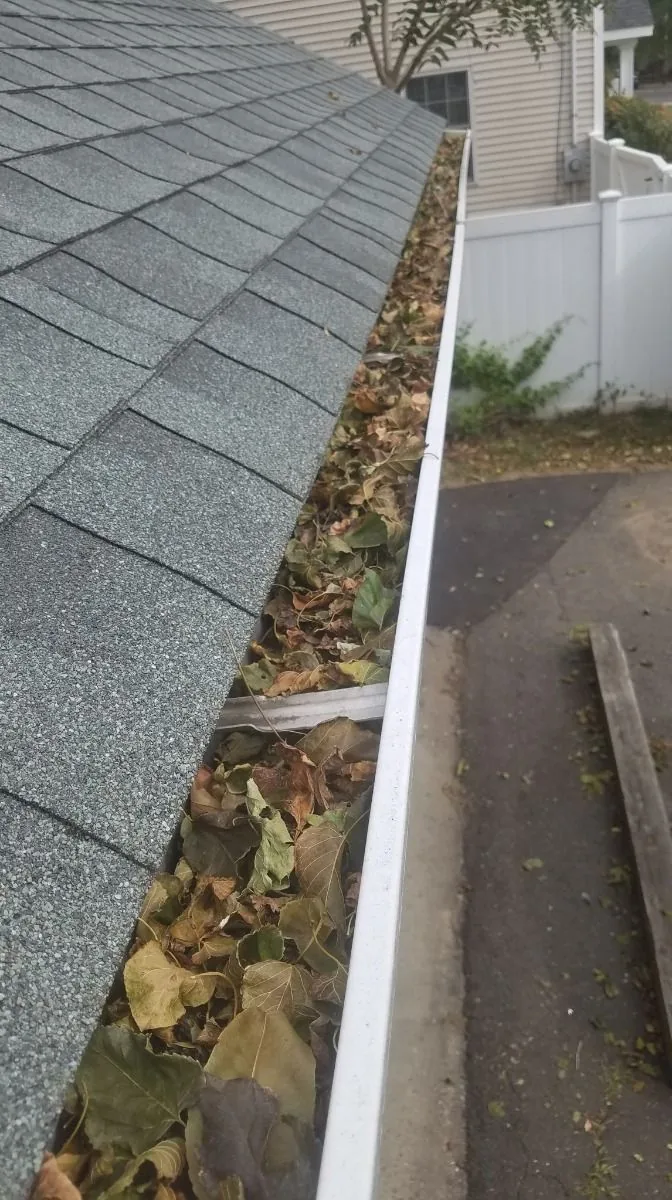
Fall is the time to check your gutters before winter arrives in Ottawa. The most useful rule is simple: clean them after most of the leaves have fallen, but before freezing weather becomes regular.
There is no single calendar date that works for every home. A property surrounded by mature trees may need attention later in the fall than a home with little tree cover. What matters is the amount of debris in the gutters and whether water can still move freely through the system.
A proper gutter check should also look beyond the gutter itself. Downspouts, drainage around the foundation, loose fasteners, sagging sections, and signs of water damage can all affect how well the system works through the winter.
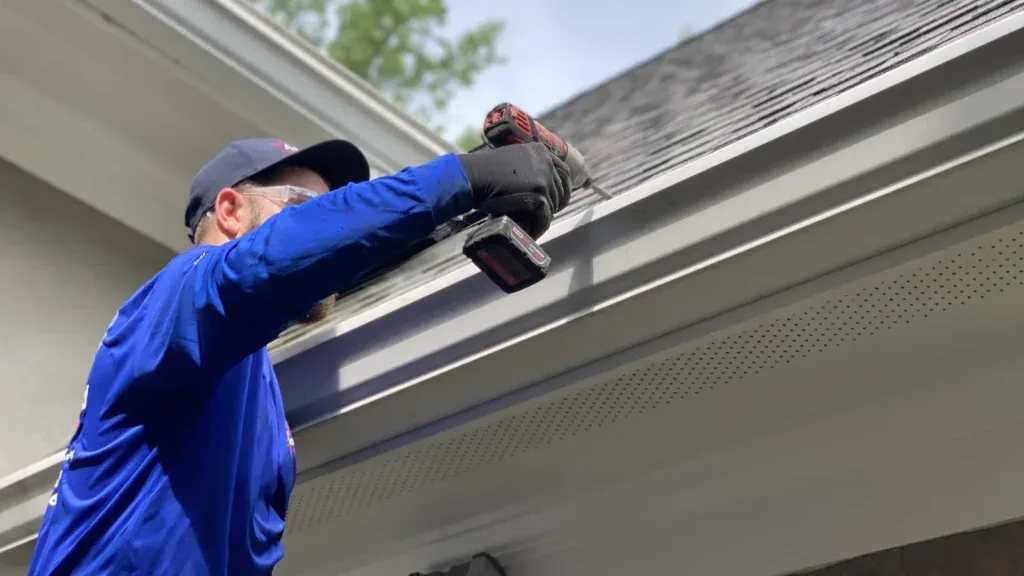
When should you clean your gutters in Ottawa?
For most homes, late fall is a practical time to inspect and clean the gutters, once the majority of leaves have come down.
The right timing depends on your property:
- Many mature trees: You may need to wait until most leaves have dropped.
- Few or no nearby trees: An earlier cleaning may be enough.
- Heavy debris after a storm: Clean the affected sections rather than waiting for a particular date.
- Gutters already overflowing: Deal with the blockage rather than waiting for the end of fall.
The goal is not to clean your gutters on a specific day. The goal is to make sure the system is clear before winter conditions make access more difficult.
Why clean gutters before winter?
Leaves and other debris can restrict the flow of rainwater through the gutter and downspout system. That can contribute to several problems.
Overflowing gutters
When water cannot reach the downspout properly, it may spill over the front or back edge of the gutter. Repeated overflow can leave water against siding, trim, landscaping, or the foundation area.
Poor drainage near the foundation
The gutter itself is only part of the drainage system. If a downspout releases a large amount of water immediately beside the house, that water can collect near the foundation.
The City of Ottawa recommends directing downspout water onto your property and toward a permeable surface, while avoiding discharge onto neighbouring properties, sidewalks, rights of way, or easements. The City’s property guidance specifies that downspouts should extend at least four feet from the foundation where physically possible.
For homeowners looking specifically at basement-moisture reduction, Ottawa’s Rain Ready guidance recommends directing downspout water to permeable areas three metres from the foundation, where the site allows it. That is a stormwater-management target rather than a contradiction of the City’s four-foot minimum guidance.
Water that freezes
Standing water and blocked drainage can become a bigger maintenance problem once temperatures stay below freezing. Clearing the system before winter helps ensure that water has a path out of the gutter and away from the home.
Gutter cleaning and ice dams are not the same problem
It is common to associate winter gutter maintenance with ice dams, but the two issues should not be treated as identical.
Ice dams form when snow on a roof melts and the water refreezes near the colder roof edge. Natural Resources Canada identifies heat loss into the attic, air leakage, insulation, and roof and attic conditions as important factors in ice-dam formation. Its guidance notes that the preferred approach for most homes is to reduce heat loss into the attic through proper air sealing and insulation.
Keeping gutters clear is still sensible winter maintenance because it allows roof runoff to drain properly. But gutter cleaning by itself does not solve a recurring ice-dam problem.
If you regularly develop substantial ice dams, it is worth investigating the roof and attic rather than treating the gutter as the entire cause.
What should you check while cleaning the gutters?
Cleaning is a good opportunity to inspect the entire drainage system.
1. Look for accumulated debris
Remove leaves, twigs, dirt, and other material from the gutter.
Do not stop at the most visible section. Debris can collect around corners, under roof valleys, and near the downspout opening.
2. Check the downspout opening
A gutter can look fairly clean while debris is still blocking the downspout opening.
Make sure water has a clear path into the downspout. If the downspout is suspected of being blocked, it should be checked separately rather than assuming that a clean-looking gutter means the entire system is clear.
3. Look for standing water
After cleaning, check whether water remains in sections of the gutter.
A small amount of water can indicate an issue with the gutter’s slope or a sagging section. Persistent standing water deserves closer inspection.
4. Check for loose or sagging gutters
Look at the gutter line from the ground and, where safe, from the work area.
Signs to watch for include:
- Sections pulling away from the fascia
- Visible sagging
- Loose fasteners
- Separating joints
- Damaged end caps
- Cracks or holes
Cleaning will not correct a gutter that is no longer properly supported.
5. Check where the downspout discharges
The end of the downspout matters just as much as the gutter above it.
Water should be directed away from the home and onto an appropriate surface without creating drainage problems for neighbouring properties. Ottawa specifically advises directing downspout water onto permeable areas and away from the foundation.
6. Look at the fascia and surrounding areas
If a gutter has been leaking or pulling away from the house, inspect the nearby fascia, soffit, trim, and siding for signs of moisture damage.
Visible staining, rot, soft wood, or persistent dampness may indicate that the problem is larger than a simple cleaning.
How often should Ottawa homeowners clean their gutters?
There is no universal schedule that applies to every property.
A better approach is to base the frequency on the amount of debris your home receives.
| Property conditions | Practical approach |
|---|---|
| Heavy tree cover | Inspect and clean more frequently |
| Moderate tree cover | Usually inspect at least once during the fall |
| Little tree cover | A seasonal inspection may be sufficient |
| Pine trees or year-round debris | Monitor more regularly |
| Recent storm or heavy leaf drop | Inspect affected areas |
If your gutters repeatedly fill with debris, a fixed once-a-year rule may not be enough.
Should you clean the gutters yourself?
For a single-storey home with safe access and the right equipment, some homeowners may choose to do the work themselves.
The main safety concern is working from a ladder, particularly on taller homes or uneven ground.
Before doing the work yourself, consider:
- Whether the ladder can be positioned securely
- Whether the ground is level
- Whether the gutter can be reached without overreaching
- Whether the roofline is unusually high or difficult to access
- Whether weather conditions make the work unsafe
- Whether you can safely inspect the downspout and gutter attachments
If the work requires awkward ladder positioning or significant height, hiring a professional can eliminate much of that risk.
What should a professional gutter cleaning include?
A thorough service may include more than removing leaves from the visible gutter channel.
Depending on the property and the condition of the system, the work may include:
- Removing debris from the gutters
- Checking the downspout openings
- Testing or checking drainage where appropriate
- Looking for loose, sagging, or damaged gutter sections
- Checking downspout discharge locations
- Identifying obvious leaks or damaged components
- Reporting repairs that appear necessary
The exact scope varies by contractor, so homeowners should confirm what is included before booking.
Cleaning versus gutter repair
Not every gutter problem can be fixed by cleaning.
| What you see | Possible issue |
|---|---|
| Leaves and dirt in the gutter | Routine cleaning |
| Water overflowing from one section | Blockage or drainage issue |
| Water remaining in a section | Possible slope or sagging problem |
| Gutter pulling away from the fascia | Loose or failed attachment |
| Water leaking at a joint | Failed seal or damaged connection |
| Downspout not draining properly | Blockage or discharge problem |
| Rot around the fascia | Possible long-term moisture damage |
These are starting points, not diagnoses. The underlying cause should be confirmed before replacing components.
Are gutter guards worth installing?
Gutter guards can reduce the amount of large debris entering a gutter, but they do not make the system maintenance-free.
Their effectiveness depends on the type of guard, the roof, surrounding trees, and the material that reaches the gutter.
Fine debris, seeds, roof granules, and other material can still accumulate. The guards themselves may also need inspection and cleaning.
If you are considering gutter guards, look at the amount and type of debris your property receives rather than assuming that any particular product will eliminate maintenance.
A simple Ottawa fall gutter checklist
Before winter, check:
- Gutters are free of leaves and accumulated debris
- Downspout openings are clear
- Downspouts discharge away from the foundation
- Water is directed toward an appropriate drainage area
- Gutters are not visibly sagging
- Fasteners and attachments appear secure
- Joints and end caps show no obvious leaks
- Fascia and soffit areas show no obvious moisture damage
- Recurring ice dams have been considered as a separate roof and attic issue
When gutter cleaning isn’t the real problem
Sometimes a homeowner notices water near the house and assumes the gutters are responsible.
That is not always the case.
The underlying problem could involve:
- Poor grading around the foundation
- An improperly positioned downspout
- A damaged or disconnected drainage component
- A leaking roof or flashing detail
- A foundation drainage issue
- A gutter that is improperly sloped or attached
- An attic insulation or air-leakage problem contributing to ice dams
This distinction matters because cleaning a gutter will not correct a grading problem, repair a roof leak, or fix an attic that is losing excessive heat.
The useful question is not simply, “Are the gutters dirty?”
It is:
“Where is the water supposed to go, and what is preventing it from getting there?”
Need help with gutter cleaning or related repairs?
Gutter cleaning and repair with Handyman Experts Ottawa costs $150 to $450, depending on home size and roofline, and you get a free written quote within 24 hours.
For Ottawa homeowners, gutter cleaning can be a straightforward seasonal maintenance job, but it is also a useful opportunity to identify problems before winter.
If your gutters are difficult to access, repeatedly overflow, pull away from the house, or appear to have related drainage or exterior issues, a professional inspection can help determine whether you need cleaning, repair, or a different type of drainage solution.
Handyman Experts Ottawa can assess the visible gutter and exterior issues and recommend the appropriate next step rather than treating every problem as a simple cleaning job.
Frequently Asked Questions
When is the best time to clean gutters in Ottawa?
Generally, after most leaves have fallen and before freezing weather becomes regular. The exact timing depends on the trees around your property and how quickly debris accumulates.
How often should gutters be cleaned?
It depends on the property. Homes surrounded by mature trees may require more frequent attention, while homes with little tree cover may need only seasonal inspection and cleaning.
Can clogged gutters cause basement problems?
Poor roof drainage can contribute to water being discharged too close to the foundation, but basement moisture has many possible causes. Downspout location, grading, foundation drainage, and other site conditions should also be considered.
Do clean gutters prevent ice dams?
No. Clean gutters help maintain drainage, but recurring ice dams are primarily a roof and attic issue involving heat loss, air leakage, insulation, and related conditions.
Should downspouts extend away from the house?
Yes. Ottawa guidance says downspouts should direct water onto your property and away from the foundation. The City’s property guidance specifies at least four feet where physically possible, while its Rain Ready program uses three metres as a target for certain stormwater-management projects.
Are gutter guards maintenance-free?
No. They can reduce the amount of debris entering the gutter, but they can still require inspection and cleaning depending on the product and the conditions around the home.
What if my gutters are clean but still overflow?
The problem may be the downspout, gutter slope, gutter capacity, a damaged section, or another drainage issue. A clean gutter does not necessarily mean the drainage system is functioning correctly.
What should I do if I keep getting ice dams?
Treat gutter cleaning as routine maintenance, but investigate the roof and attic as well. Recurring ice dams can be associated with attic air leakage, insufficient insulation, and other heat-transfer or ventilation conditions.